What Is Kratom? A Canadian Beginner’s Guide to the Plant, Its Alkaloids and Safety
Please don’t be fooled with vendors saying high MIT levels like 1.7 . When a vendor boost high levels of MIT and calls it Super or better that is a clear sign that vendor has not idea on how Kratom works. Higher MIT levels does not mean better Kratom….. Let me say that once more HIGHER MIT levels does not mean better Kratom. So much goes into the perfect balance to produce a high quality Kratom Powder at the end. Please do not be fulled with MIT levels.
Kratom is the common name for Mitragyna speciosa, a tropical tree native to Southeast Asia. Its leaves contain naturally occurring compounds called alkaloids. People have used the leaves traditionally in parts of Southeast Asia, while modern kratom products may be sold as dried leaves, powder, capsules or concentrated extracts. If you are new to the subject, the most useful starting point is to understand the plant, the difference between leaf and extract, and the limits of current research. [1] Just as important is where you buy your kratom from in Canada!!! Kratom is only as good as the source you buy it from!! This is why it was so important for us to create this site!! Other review site promote vendors based on how much they pay!!!! We do accept payment for promoting!! You want to be promoted by us?? Then provide the best product and customer services!!! Kratom Canada!
Where does kratom come from?
Kratom belongs to the coffee family, Rubiaceae. The tree grows in Southeast Asia, where its leaves have a long history of traditional use. After harvest, leaves may be dried and milled into powder. Growing conditions and processing can affect a finished product, but a regional or strain name alone cannot tell you its exact chemical composition. [1, 2]
What are the main kratom alkaloids?
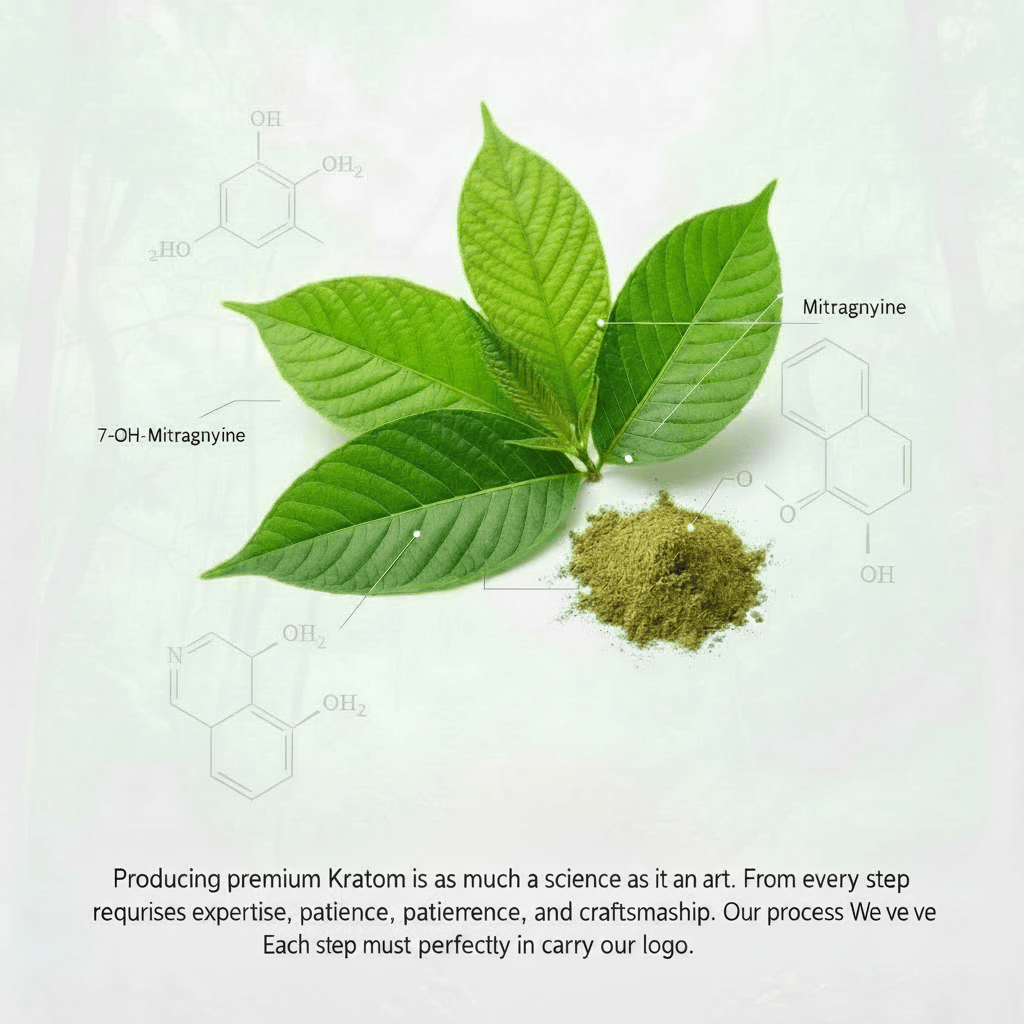
Mitragynine is the best studied alkaloid in kratom leaves. 7-hydroxymitragynine, often shortened to 7-OH, is another compound researchers study; the body can also form it when it metabolizes mitragynine. These compounds interact with opioid receptors. Their presence does not establish that kratom is a safe or approved treatment for pain, opioid withdrawal or any other condition. [1, 2]
Whole leaf powder and concentrated extracts deserve separate consideration. Extracts can have different concentrations and composition from ordinary leaf powder. A product marketed with a high concentration of 7-OH should not be assumed to represent the effects or risks of traditional kratom leaf. [1, 2]
What do red, green and white kratom mean?
Red, green and white are common commercial labels. Sellers also use names such as Maeng Da, Borneo and Sumatra. These names can help shoppers navigate a catalogue, but they are not reliable guarantees of a particular alkaloid level or effect. If a seller claims one colour always has a fixed result, ask for evidence. Product composition and individual responses can vary. [2]
What does research say about kratom’s effects?
People report both stimulant-like effects, such as increased alertness, and opioid-like or sedating effects. Some report using kratom for pain or opioid withdrawal. These are reports of use, not proof that kratom treats either condition. Research in people remains limited, and its short- and long-term effects are not fully understood. It should not replace professional care or evidence-based treatment for opioid use disorder. [1, 2]
What are the risks?
Reported adverse effects include nausea, constipation, dizziness and drowsiness. More serious problems reported in association with kratom include seizures, liver problems and dependence or withdrawal after regular use. Combining kratom with other substances can increase uncertainty and risk. Researchers have also found harmful contaminants, including bacteria and heavy metals, in some products. “Plant-based” does not mean risk-free. [1, 2]
For any botanical product, a clearly identified batch and a relevant independent laboratory report can help you evaluate what was tested. Ask whether results cover identity, alkaloid content and contaminants, and whether the report matches the batch offered. A test report does not make a product medically approved or guarantee safety for an individual.
What should Canadians know about kratom?
Health Canada has stated that it has not authorized the sale of any product containing kratom and warns that kratom may pose serious health risks when swallowed or inhaled. It is illegal to sell unauthorized health products in Canada. Avoid interpreting “available online” or “ships from Canada” as a Health Canada approval or a finding of safety. Check current official guidance before making claims about a product’s legal status or permitted marketing. [3]
Frequently asked questions
Is kratom the same as coffee?
No. Kratom is a distinct tree species, though it belongs to the same plant family as coffee. [1]
Is kratom an opioid?
Kratom is a plant, while some of its alkaloids interact with opioid receptors and can produce opioid-like effects. That distinction does not remove the possibility of dependence or other harms. [1, 2]
Is kratom approved for medical use in Canada?
No. Health Canada has said it has not authorized the sale of products containing kratom. Do not treat kratom as an approved therapy. [3]
Is kratom leaf powder the same as a kratom extract?
No. Leaf powder consists of processed leaves; extracts are concentrated preparations and may differ substantially in alkaloid content. The label alone cannot establish what a product contains. [2]
The takeaway
Kratom is a Southeast Asian tree whose leaves contain biologically active alkaloids. Interest in the plant is growing, but its effects, product variability and safety deserve careful attention. For Canadian readers, Health Canada’s position on unauthorized kratom products is an essential part of the answer to “what is kratom?” [1–3]
Top Vendor for 2026
Canuck Kratom has earned the spot Top Canadian Kratom Vendor 2026!

